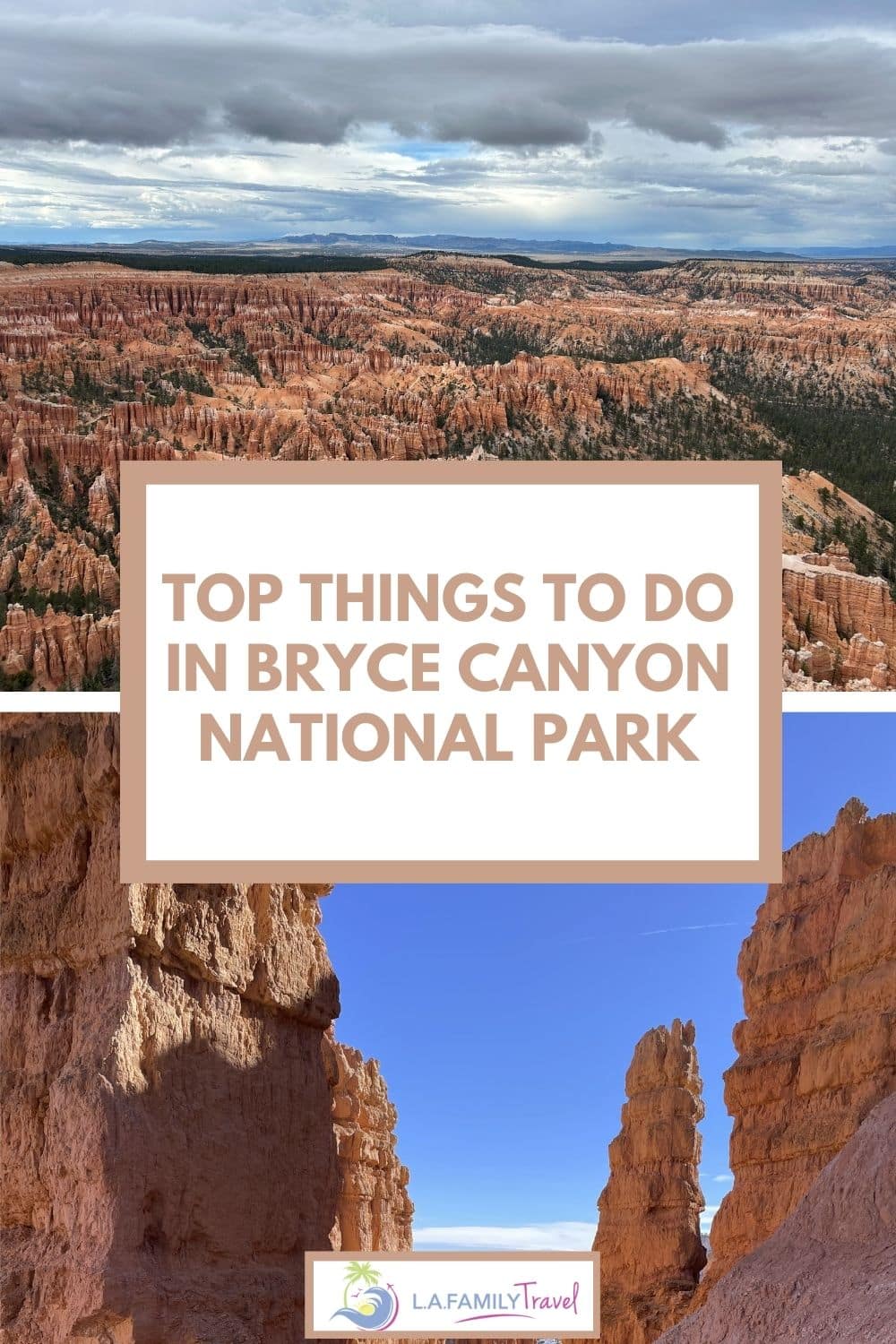

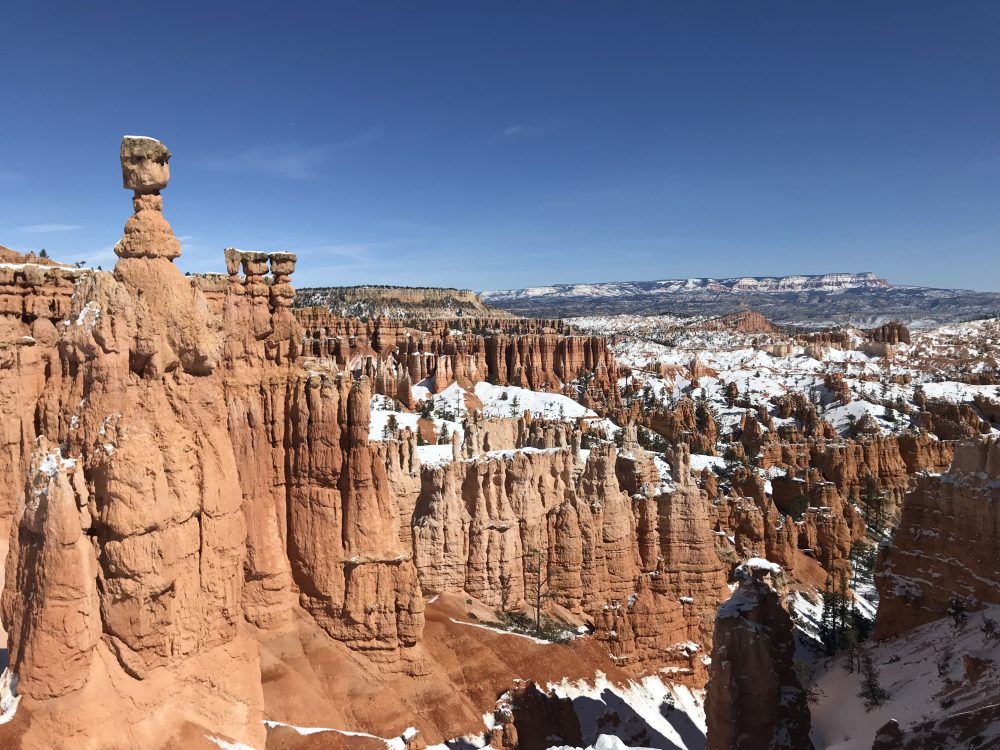
There is no shortage of impressive national parks in the American West, and yet, Bryce Canyon stands unique among them. The first time I came, I wasn’t entirely sure I was in the right place. The park entrance is in a pine forest with no noteworthy views. After parking, I followed a paved path to where the trees cleared. Before me rose a sandstone amphitheater with towers and walls the likes of which I had never seen. Snow and sagebrush mixed with reddish-orange rock to create a palette of Christmas colors. I stood staring for several minutes. I had been to the Grand Canyon and Yellowstone, but this was something entirely different.
NO TIME TO ENJOY THIS ARTICLE NOW? PIN IT OR BOOKMARK IT FOR LATER!
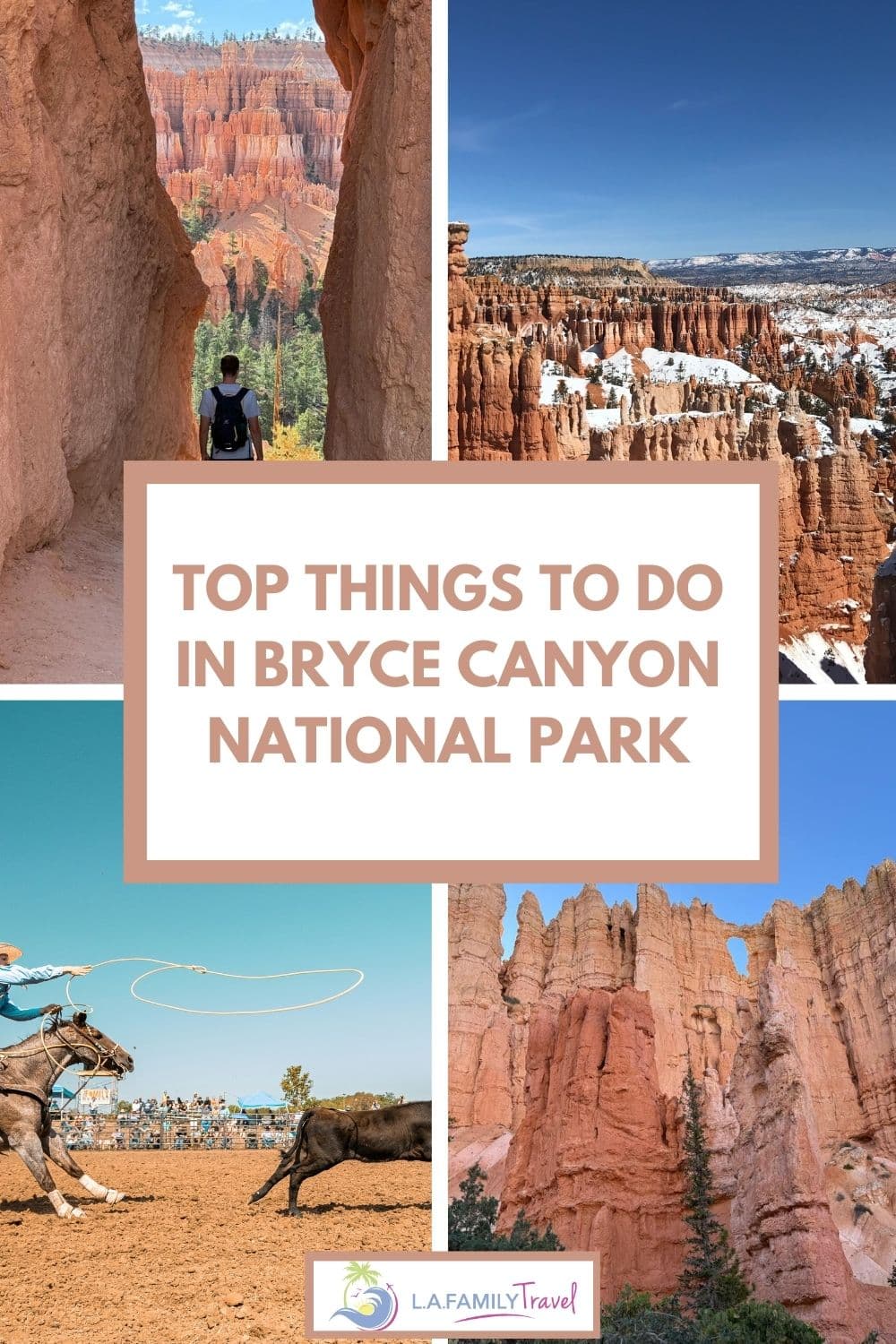
A half-dozen trips later, I still don’t get tired of bringing family and friends, seeing the awe in their faces as they approach the canyon rim, and hearing their gasps as they marvel at the ancient rock formations. My dad still tells stories about Bryce around the Thanksgiving table, his eyes as wide as the first day he visited.
Apart from the outstanding trails, families can round out a trip to Bryce Canyon with scenic drives, bike rides, ATV tours, horseback riding, stargazing, and even a rodeo. No matter what you choose to do, everyone’s leaving with memories.
History & Geology
The park gets its name from a Mormon pioneer, Ebeneezer Bryce, who tried to raise cattle in the area. It turned out to be a poor choice, as the cows would get lost in the maze of hoodoos. Bryce left, but the name remained, and in 1928 it was established as a national park. Long before the Mormon pioneers arrived, Native American tribes such as the Paiute, Ute, and Navajo occupied the lands.
The canyon owes its unique shape to erosion forces. Water from rain and snowmelt filled cracks in the sandstone. When it froze, the ice expanded, breaking and chipping away the rock. Over millions of years, this process molded the hoodoos we find today in the canyon’s amphitheaters.
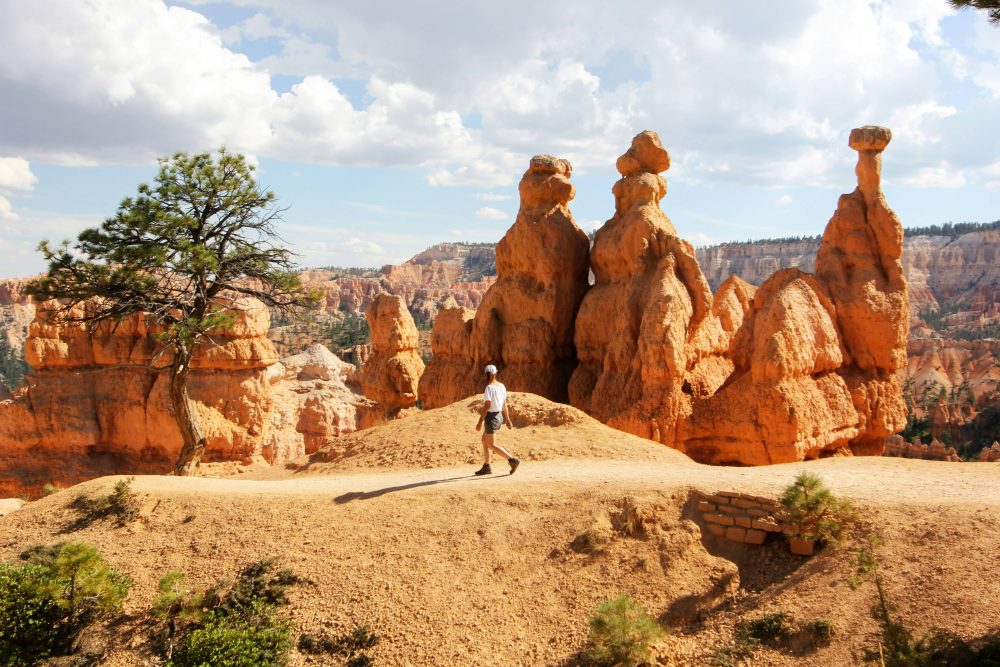
Nice hoodoos, but where are the cows? Photo by Arnaud STECKLE on Unsplash.
Best Time to Visit Bryce Canyon NP
Unsurprisingly, Bryce is most crowded in the summer months. But my favorite time to visit is winter, even though I have a strong aversion to cold. The crowds are thin, and the snow adds a special touch of magic to the scenery. The only downside is that ice can build up on some trails, leading to closures.
Bring layers, even in the summer months. Bryce Canyon is a high-elevation park at 8,000 feet. Once the sun goes down, it gets cold fast.
DON’T MISS! Family Adventure Awaits At These 7 National Parks Near Las Vegas
Visitor Center
The park’s visitor center explains the canyon’s natural history through interactive exhibits that both children and adults will find fun and educational. No matter who I’m with, I make it a point to stop at the visitor center, and I always walk away learning something new! I’m also a sucker for national park merch. “Just one more sticker for my waterbottle,” I’ve lied more than once.
Shuttle
The park runs a shuttle starting from Bryce Canyon City. It makes stops at the visitor center, campsites, lookouts, and ends at Bryce Point. This is a great option during peak months when parking fills up early. It’s free to ride, provided you have a park pass or paid the entry fee. Sometimes the shuttle drivers share interesting tidbits about that park. Did you know that Bryce Canyon is home to the pronghorn deer, the fastest land animal in North America? I might have just stolen a driver’s thunder.
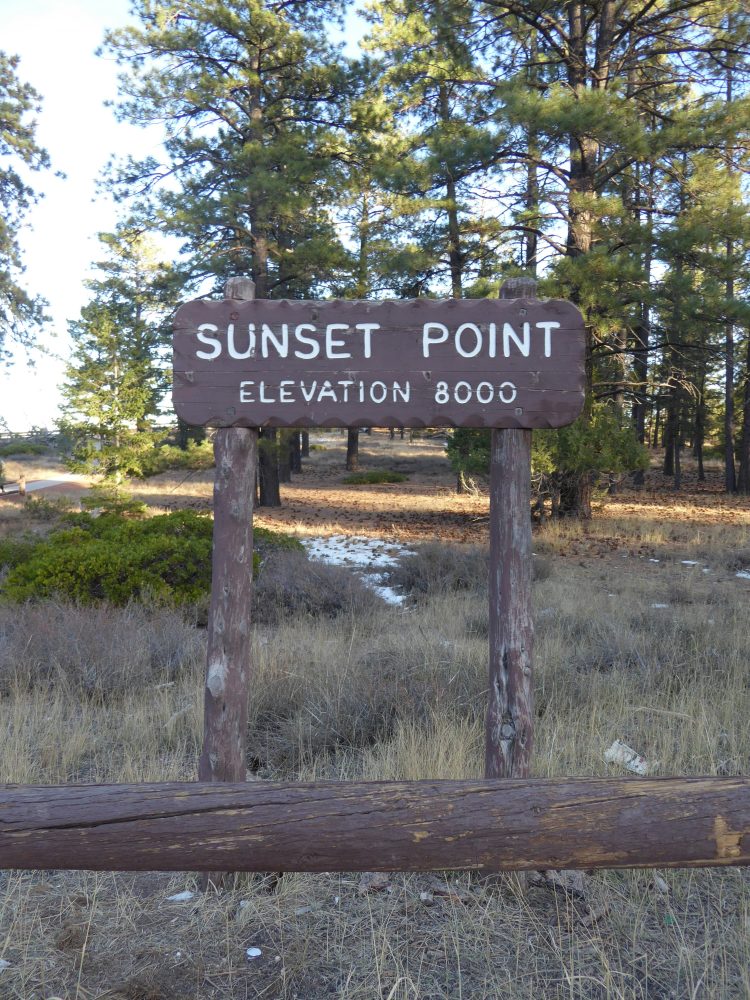
Hop off the shuttle at Sunset Point for an iconic view of the canyon. Photo by Karin Kim on Unsplash.
Hikes
There’s a lot to do in and around Bryce, but no better way to revel in its mesmerizing beauty than by hitting the trails! Here are a few of my favorites that I’ve hiked with nieces and nephews, aging parents, and even our dog.
Navajo Loop
Navajo Loop is a must for anyone who wants to get up close to Bryce’s most famous hoodoos, like Thor’s Hammer and The Gossips. It takes between one and two hours to complete, depending on how many pictures you take (clear room in your photo gallery!).
We typically begin at Sunset Point because we find the climb out on Sunrise’s side a bit easier, but you can hike it either way. Due to its moderate inclines and a set of switchbacks, this trail may prove challenging for young children and older adults. My 70-year-old mother had some reservations at first, but she took her time and made it just fine. In the end, she was glad she hadn’t backed out!
Length: 1.3 miles
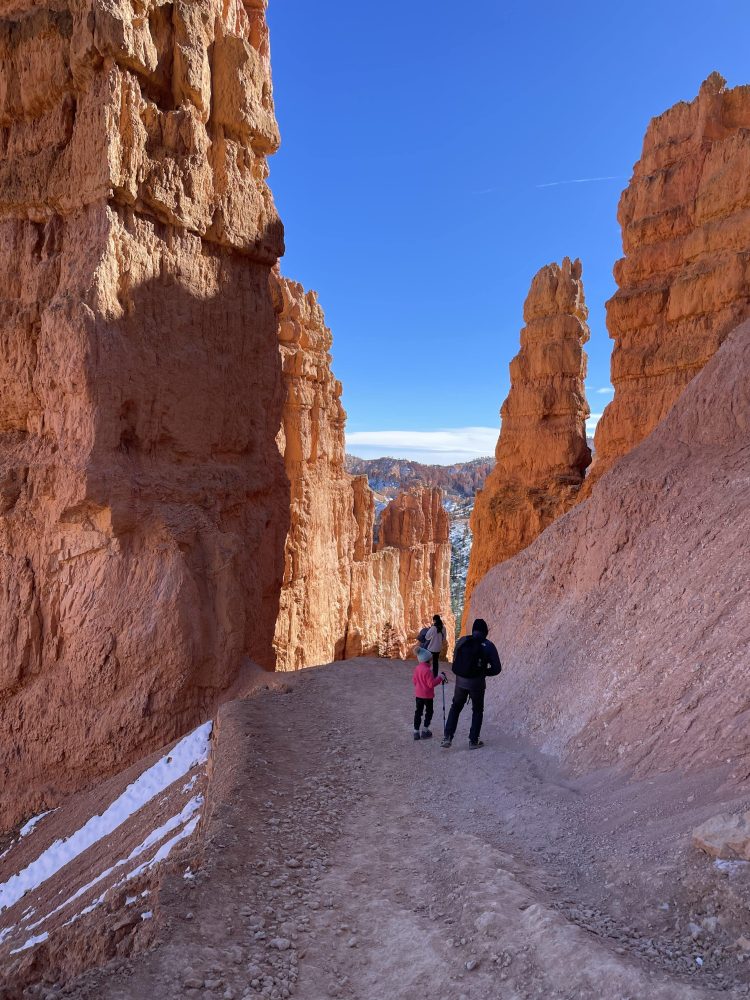
Setting off on the Navajo Loop. Photo by Monte Erwin.
DON’T MISS! How To Make Unforgettable Memories At The Grand Canyon With Kids
Wall Street
Wall Street is a good one to pair with the Navajo Loop. Starting at Sunset Point, you’ll descend switchbacks into the red amphitheater. I’m always surprised by how large the sandstone walls become the further I trek into the canyon. Look for the Douglas-firs at the base of the switchbacks, standing proud between the giant red walls.
Length: 1.3 miles
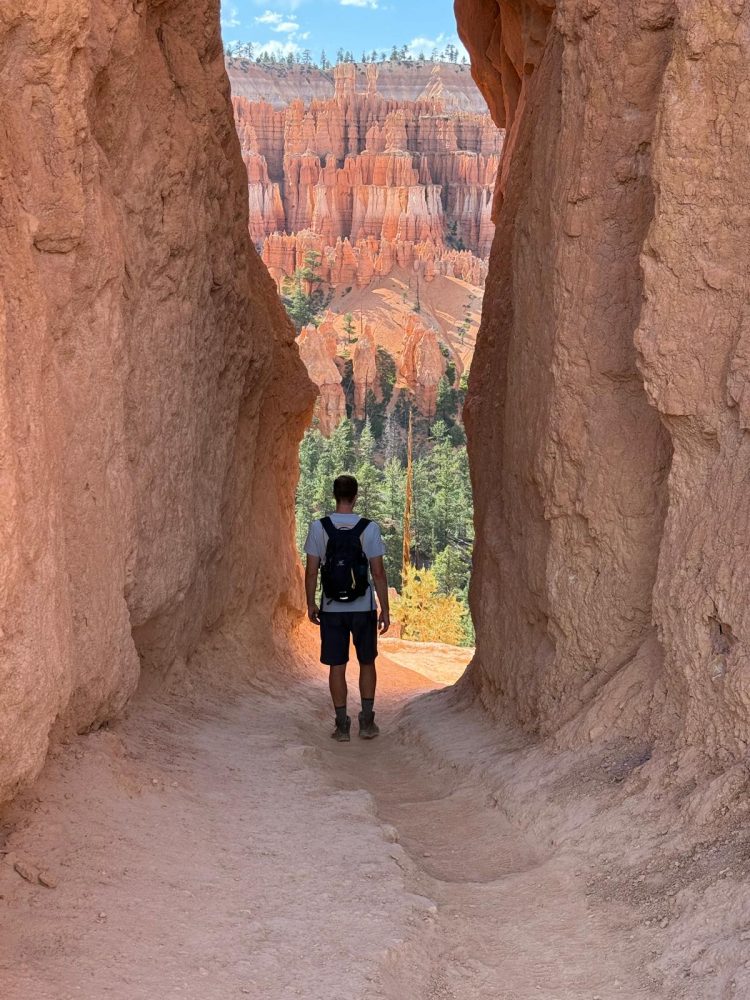
Not checking my portfolio in Wall Street. Photo by Trey Erwin.
Rim Trail
If steep inclines aren’t your thing, take a stroll on the Rim Trail along the edge of the canyon. Parts of the trail are paved, and the stretch from Sunrise to Sunset Point is mostly flat with a few gentle grades—very manageable for families with little ones or those with mobility challenges. Dogs are allowed on the trail, too. I’m not sure ours appreciated the views as much as we did, but he certainly enjoyed stretching his legs and meeting other visitors. The trail continues all the way until Bryce Point, but beyond Sunset Point, the trail is unpaved, and there are a few moderate inclines.
Length: Up to 11 miles (Sunset to Sunrise and back 1 mile)
Peekaboo
We love the Peekaboo Trail because it’s far less crowded than the others. It takes you deep into the amphitheater, around hoodoos and rock cathedrals that most only see from the rim. When you reach the halfway point, look up to find “windows” high in the rock walls. A hat, salty snacks, and plenty of water are essential for this 5.5-mile loop (3-4 hours) in summer.
Length: 5.5 miles
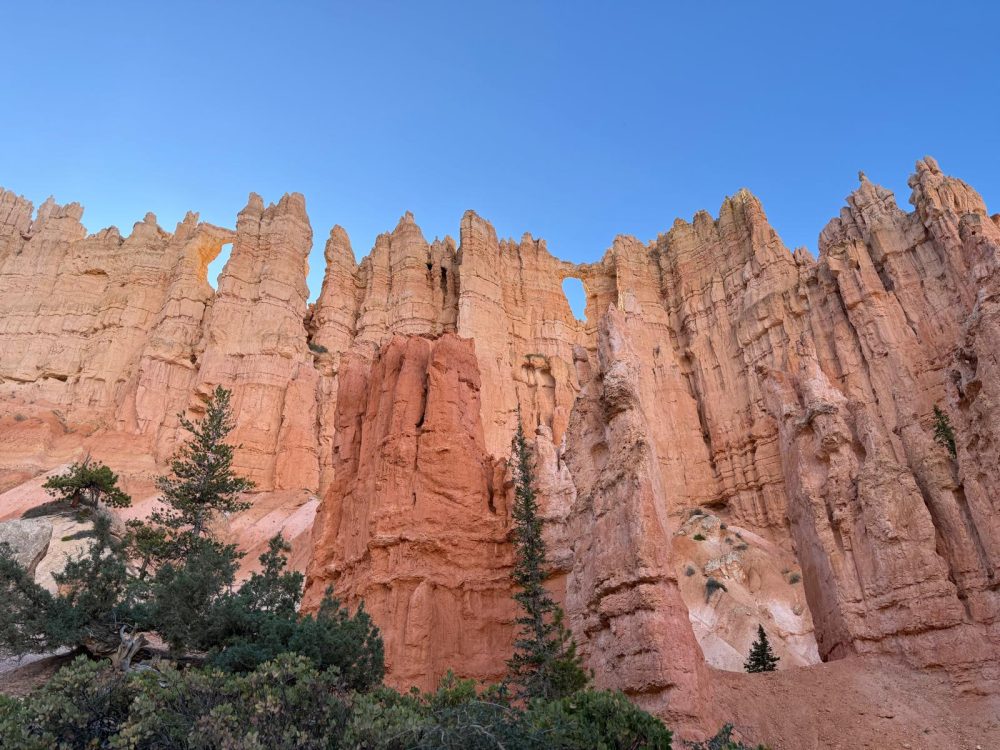
Can someone get the curtains? Photo by Trey Erwin.
Lookouts
You can drive right up to many of the park’s best lookouts or take the shuttle. Here are the best places for views and pictures you’ll want to frame.
Sunrise Point
Sunrise Point is the closest lookout to the visitor center. Families can park and walk a few minutes through the pines and bristlecones until they catch that first glimpse of the enormous amphitheater, including the Queen Victoria Hoodoo. To see it up close, take the Queen’s Garden Trail (1.8 miles), which begins here.
Sunset Point
Half a mile past Sunrise is Sunset Point. There’s a larger parking lot, a restroom, and tables for a picnic lunch. Expect crowds, but the view is worth it!
Inspiration Point
Because it’s a few hundred feet higher than the previous two, Inspiration Point has more of a birds-eye view of the canyon. It requires a short uphill walk to reach.
Bryce Point
If you thought the others were grand, prepare to get swept off your feet. From Bryce Point, you can see it all, even Navajo Mountain 80 miles away in Arizona!
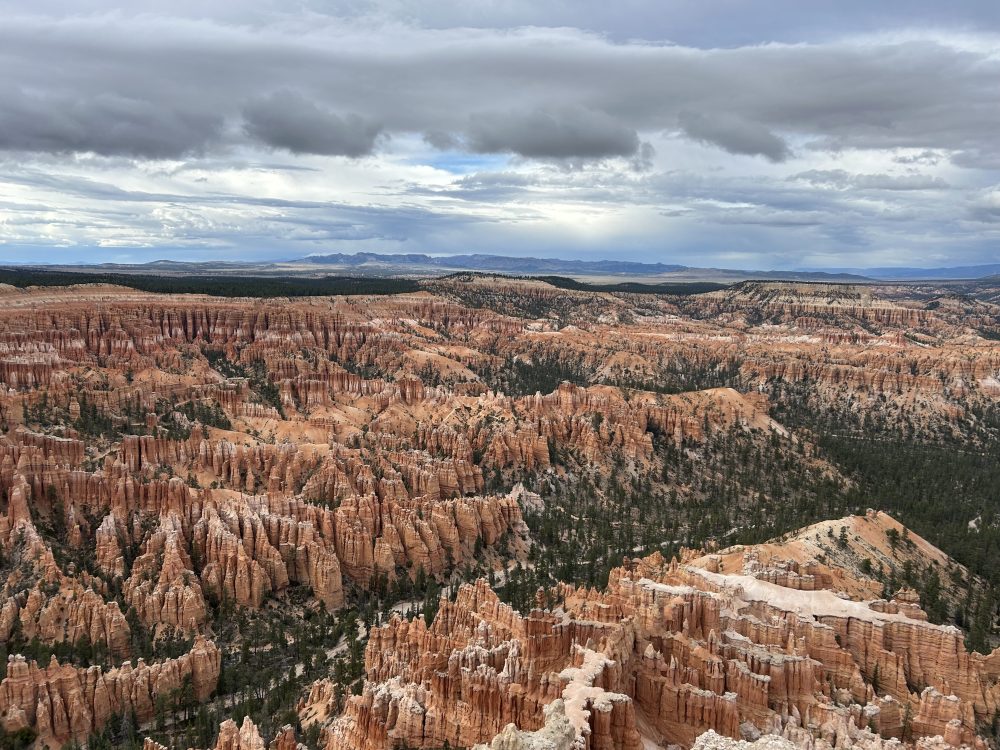
As much of the canyon as I could fit into my lens at Bryce Point. Photo by Trey Erwin.
Stargazing
When I brought my dad for a camping trip in September, things got off to a rainy start. But when the clouds dissipated, the night sky turned into an array of stars in their constellations. I’m not much of an astronomer, but even I can make out Orion when it’s that clear. We gazed thoughtfully until our necks could crane no more.
Bryce has minimal light pollution, which makes the night skies some of the darkest in the country. Drive to any lookout point about an hour after dark and stare up at the thousands of cosmic lights. It’s not uncommon to see a shooting star or two! Dress warmly because temperatures drop quickly.
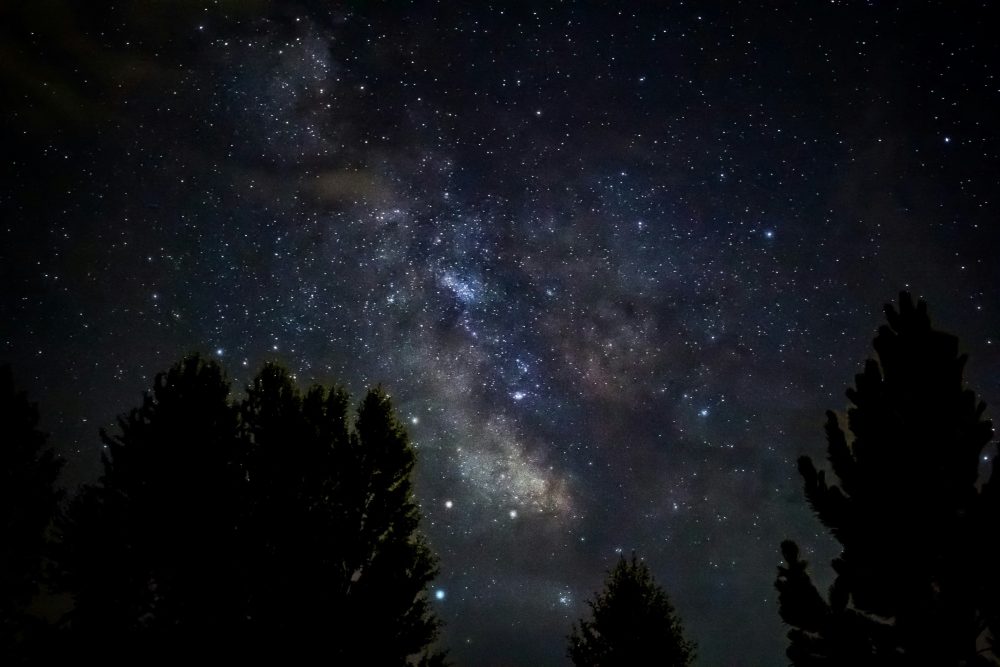
Some of the best stargazing in the country. Photo by Jeremy Thomas on Unsplash
DON’T MISS! View Breathtaking Landscapes At These 20 National Parks In The USA
Bikes & ATVs
There are miles of paved bike paths in and around Bryce. The Shared-Use Path in the park is a smooth and short ride, perfect for all ages. Keep watch for elk and prairie dogs. A longer but still easy ride is the gorgeous Red Canyon Paved Bike Trail. For older kids or more experienced riders, don’t miss Thunder Mountain Trail. Rent from Bryce Canyon EZ Riders or Outta Here eBikes.
Itching to go faster? Book an ATV tour or explore on your own. Their vehicles are equipped with emergency kits and GPS trackers.
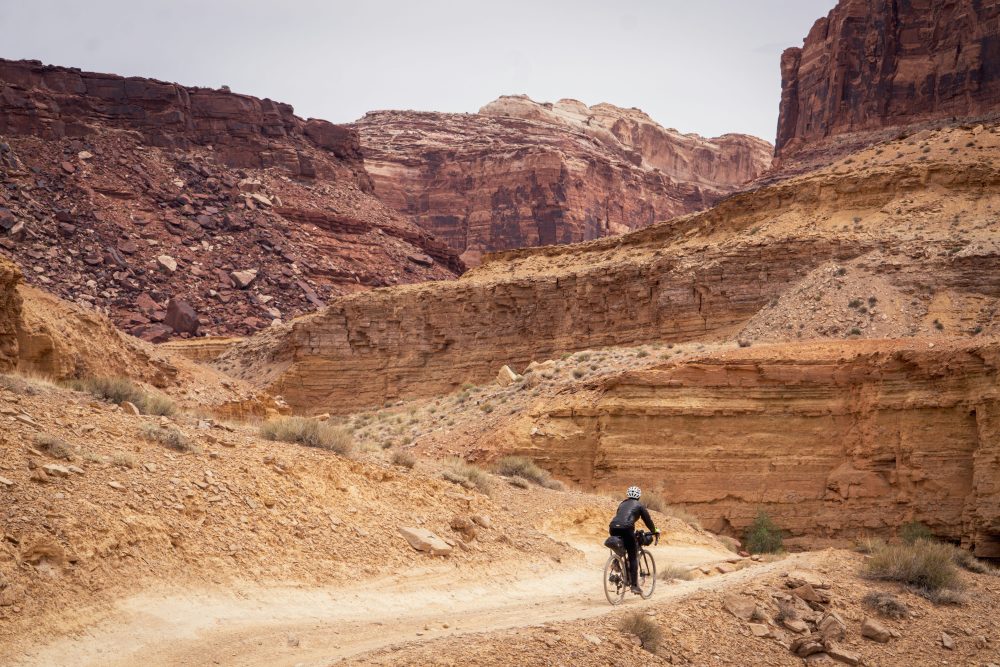
There are 18 miles of bike path between Bryce and the Red Canyon. Photo by Brent Olson on Unsplash
Horseback Riding
If the Peekaboo Trail seems too long to hike with kids, book a tour with Canyon Trail Rides, the park’s official guided horseback tours. The horses are gentle and used to inexperienced riders.
More Activities
Looking for something else to do? Get tickets to the rodeo and turn back the clock for a night of old-fashioned western fun! Shows are available from May to October.
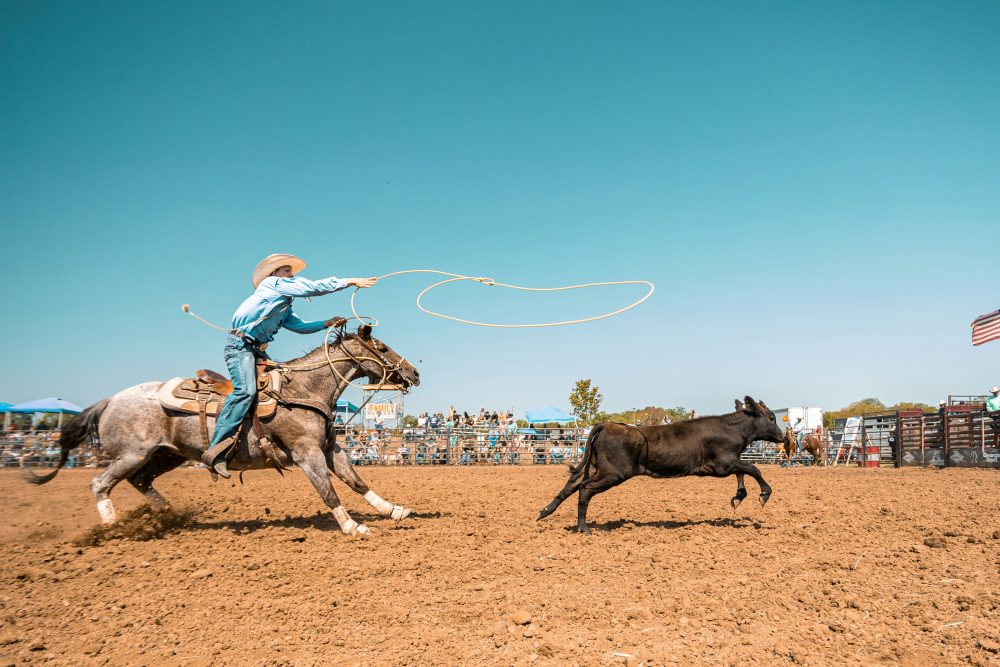
Before TVs, there were cowboys roping calves. Photo by Xavier McLaren on Unsplash
If you’ve got time and don’t mind driving a few extra hours, other nearby attractions include Zion National Park and Kolob Canyon to the west. At the same time, the Grand Staircase-Escalante National Monument and Capitol Reef National Park lie to the east. Most visitors pair at least one of these with Bryce as part of a Utah road trip.
When You Go
Where to Stay in Bryce Canyon
Just one mile from Bryce Canyon National Park, Best Western Plus Ruby’s Inn is the perfect budget-friendly base for family adventures in Utah’s stunning red rock country. Comfortable, air-conditioned rooms feature TVs, coffee makers, private bathrooms with free toiletries, and some include relaxing seating areas or spa baths. Kids will love the indoor and seasonal outdoor pools, while everyone enjoys the on-site general store for snacks, camping gear, and Native American crafts. Thrilling activities like horseback riding, mountain biking, guided ATV rides, helicopter tours, and summer rodeos are nearby.
Nestled inside Bryce Canyon National Park, just steps from stunning Sunrise and Sunset Points, The Lodge at Bryce Canyon offers a moderately priced, historic, rustic retreat perfect for family adventures amid the iconic hoodoos. Cozy rooms and cabins feature coffee/tea makers, workspaces, and travel cribs, with some including fireplaces for evening relaxation. Enjoy on-site dining at two restaurants (with kid-friendly options), a general store for snacks and souvenirs, free parking, and a cozy lobby fireplace. Families love the easy access to ranger-led programs, gentle rim walks, horseback rides, and world-class stargazing
For a private desert retreat, book a private home or use this interactive map to choose where you want to stay.
Getting To Bryce Canyon NP From Los Angeles
Traveling from Los Angeles to Bryce Canyon National Park is a scenic adventure featuring stunning red rock hoodoos and vast landscapes.
The most popular option is driving (~550 miles, 8-9 hours), often with stops like Las Vegas or Zion.
Alternatively, there are non-stop flights from LAX to St. George (SGU) on United Airlines (~1.5 hours flight), then a 2.5-hour drive to the park.
No direct commercial flights exist to Bryce’s tiny airport.
An excellent discount site for rental cars and flights is Booking! We literally save hundreds using it.
IF YOU ENJOYED THIS ARTICLE, PLEASE CONSIDER PINNING OR SHARING IT!