


Any parent who has taken a small child abroad knows the particular dread of the first night away. The bed is unfamiliar, the room is too bright, the time zone is wrong, and a toddler who normally goes down at seven is suddenly bouncing off the walls at eleven. What was meant to be a relaxing family holiday becomes a nightly negotiation, and everyone comes home needing a rest.
Children’s sleep is more fragile than adults’ and more dependent on routine, which is exactly what travel disrupts. The good news is that a bit of planning can keep the routine intact enough to keep the holiday enjoyable for everyone, parents included.
Protect the routine, not the schedule
The instinct is to keep bedtime at the exact same clock time, but that is the wrong thing to cling to. What matters to a young child is the sequence of events, not the hour on the wall. Bath, story, cuddle, bed: if that order survives the trip, children adapt to a slightly different timing far more easily than parents expect.
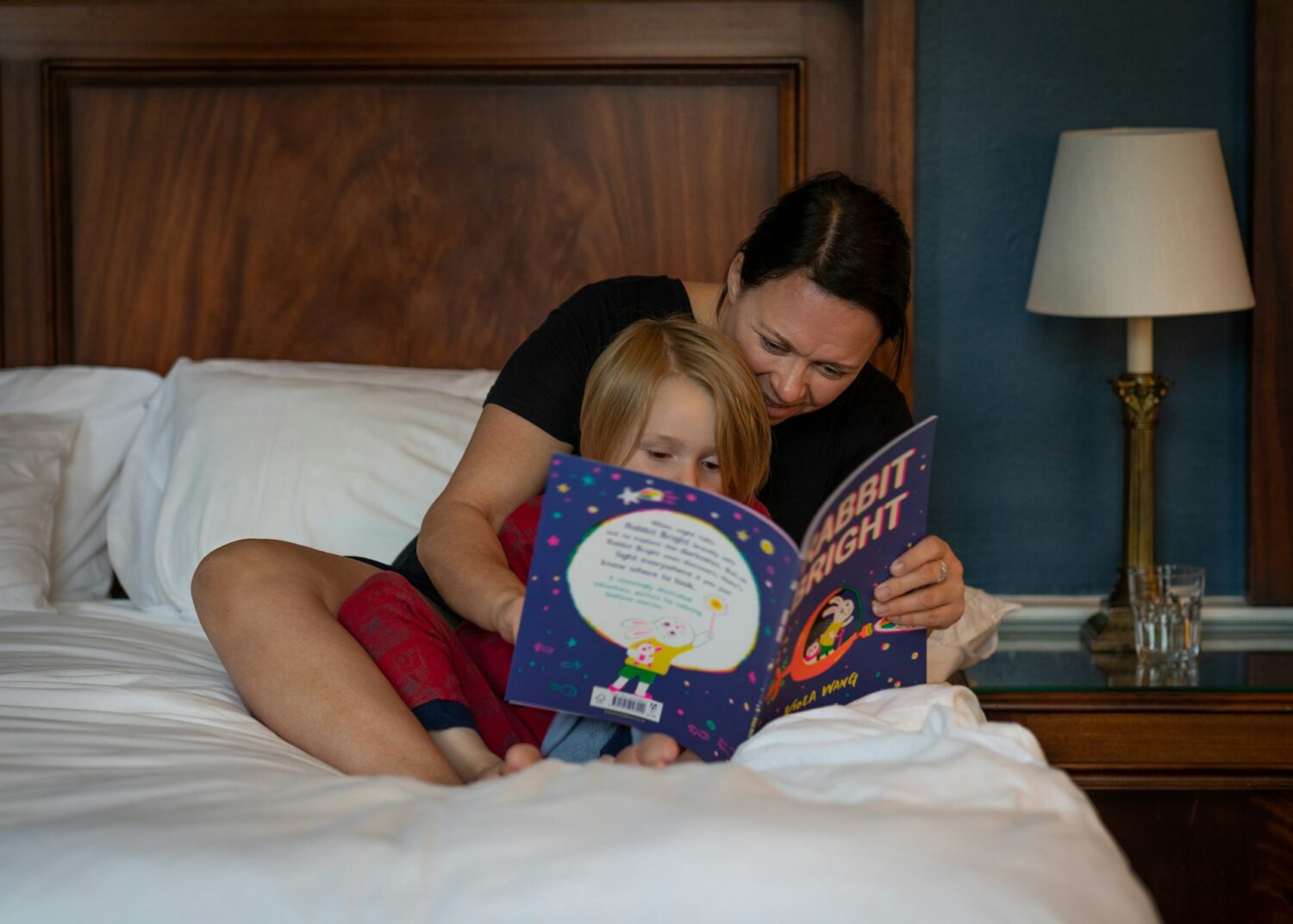
A favorite book, stuffed animal, or bedtime song can make an unfamiliar hotel room feel a little more like home.
Photo by Ben Griffiths on Unsplash
So pack the props that make the routine portable. The specific bedtime book, the comfort toy, the sleeping bag or blanket that smells of home, the white noise machine or app. These familiar cues do a huge amount of the work of settling a child in a strange room, because they signal that nothing important has changed, even though everything around them has.
DON’T MISS! Essential Baby Travel Hacks You Can Use Anywhere
Manage the time zone gently
For trips across more than a couple of time zones, the same gradual approach that works for adults works for children, only more patiently. Shifting your bedtime by 15 or 20 minutes a day in the week before you fly takes the edge off the adjustment. On arrival, get the children out into daylight, keep meals on local time, and accept that the first day or two will be rough.

Natural daylight and a little patience go a long way when helping kids adjust to a new time zone.
Photo by Olivia Bauso on Unsplash
Resist the temptation to let a jet-lagged child nap for hours in the afternoon, however peaceful it seems at the time. A long, late nap simply guarantees a midnight party. A short, capped nap is fine; an open-ended one is a mistake you pay for at 2 am.
Check the sleeping arrangements before you book
Accommodation listings are written to sell the pool and the location, not the cot, so it pays to ask direct questions before you commit. Is there a travel cot, and is it clean and in one piece? Can the children’s room be properly darkened? Is it next to the lift, the bar, or the main road?

Asking a few extra questions before booking can help prevent sleepless nights later. Photo by Annie Spratt on Unsplash
For older children, the bed itself is worth a thought. A sagging sofa bed or a lumpy spare mattress that an adult might tolerate for a weekend can genuinely disrupt a child who is used to proper support. Children spend more of the night in deep sleep than adults, and their growing bodies are doing real work overnight, which is part of why a good kids’ mattress matters at home and why a poor surface away from home shows up so quickly in their mood the next day.
Plan days that allow for rest
Overtired children do not sleep better; they sleep worse, fighting the very thing they need. The classic holiday error is cramming the days with activity, dragging exhausted toddlers around one more attraction, and then wondering why bedtime is a battle. Build the days around energy, not ambition. A busy morning followed by a quiet afternoon works far better than a relentless schedule from dawn to dusk.

Fresh air, active mornings, and slower afternoons create a rhythm that works well for young travelers.
Photo by Vitaly Gariev on Unsplash
Outdoor activities and fresh air during the day genuinely help children sleep at night, so a morning at the beach or the park is doing double duty. Just keep the late afternoon calm, dim the evening down, and avoid screens in the wind-down hour, which overstimulate a tired child exactly when you want them to settle.
DON’T MISS! 6 Tips to Survive Your First Hotel Stay with a Baby
Keep your own expectations realistic
Perhaps the most useful advice is to lower the bar. The first night will probably be broken. Children pick up on parental tension, so the calmer you stay about it, the faster everyone settles. By the third or fourth night, the new room is familiar, the routine has reasserted itself, and the holiday becomes the one in the photographs rather than the one you endure.

Family vacations don’t have to be perfect to become unforgettable.
Photo by Natalya Zaritskaya on Unsplash
Travel with young children is never effortless, but it does not have to mean a fortnight of sleepless nights. Carry the routine with you, respect the time zone, check the sleeping setup before you arrive, and pace the days so nobody hits empty. Do that, and the children sleep, which means the parents sleep, which is the only version of a family holiday anyone actually wants.