
“Mama, look!” My three-year-old daughter’s face beams up at me, covered in mud and so proud of her artistry. We’re at a workday, volunteering our labor for the morning to work the land, but somehow, she’s managing to indulge in her very own personal spa. We’ve come to volunteer at a loʻi, a traditional Hawaiian wetland taro patch, at Papahana Kuaola on the windward side of Oʻahu.
Participating in volunteer work while on vacation may not be something many have considered doing on their family vacation, especially if they’re looking to get a little rest and relaxation away from, well, work. However, if you are traveling to Hawaiʻi, especially with kids, getting involved in local volunteer projects is a great way to have a fun and valuable experience with your family while contributing something meaningful to the community.
I love taking my three-year-old to volunteer days in our community – learning more about the local area, culture, and environment, connecting with nature, and meeting new people. Many of these factors make getting involved as a volunteer while on vacation so worthwhile.
NO TIME TO ENJOY THIS ARTICLE NOW? PIN IT OR BOOKMARK FOR LATER!
Lo’i Kalo
The green spine of the Ko’olau Range mountains stretched to meet the sky like the spires of a great cathedral over the lush landscape below. My daughter and I joined a group of volunteers gathered in a circle, ready to start our workday. A staff member welcomed us and led us in Hawaiian protocol, offering oli (chants) to this sacred place, acknowledging the space, and asking permission to enter. He then shared some history of the land and the purpose of Papahana Kuaola, a non-profit organization established to restore this land, once used as an illegal dumping site. Based on the concept of mālama ʻāina, to care for the land, the organization is rooted in Hawaiian culture and knowledge and offers various educational programs centered on these cultural resources.
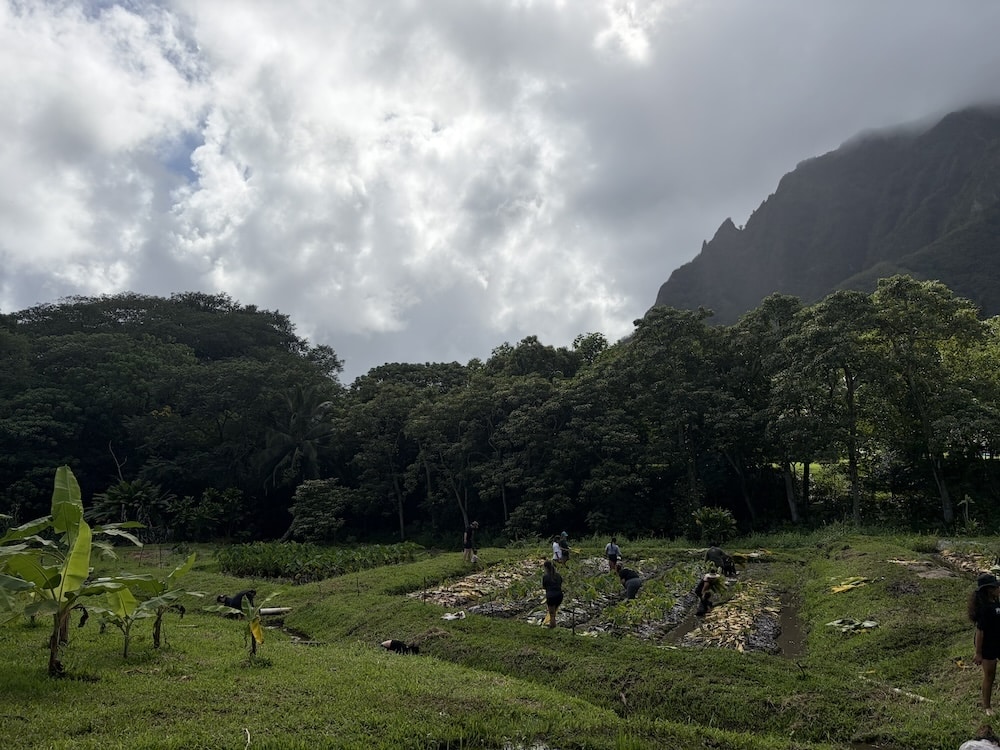
Working in the loʻi, beneath the Koʻolau mountains.
Taro (kalo) is profoundly significant in Hawaiian culture; a staple food in the islands for centuries, and the ancestor of the Hawaiian people in the Hawaiian creation story. Cultivation of this crop once sustained up to a million people in the islands prior to European contact. Today, around 90% of food in the islands is imported. Our guide explains the problems this could create in terms of food insecurity if, for any reason, the boats stop arriving. Community agriculture projects such as this are trying to build a more sustainable future for local communities.
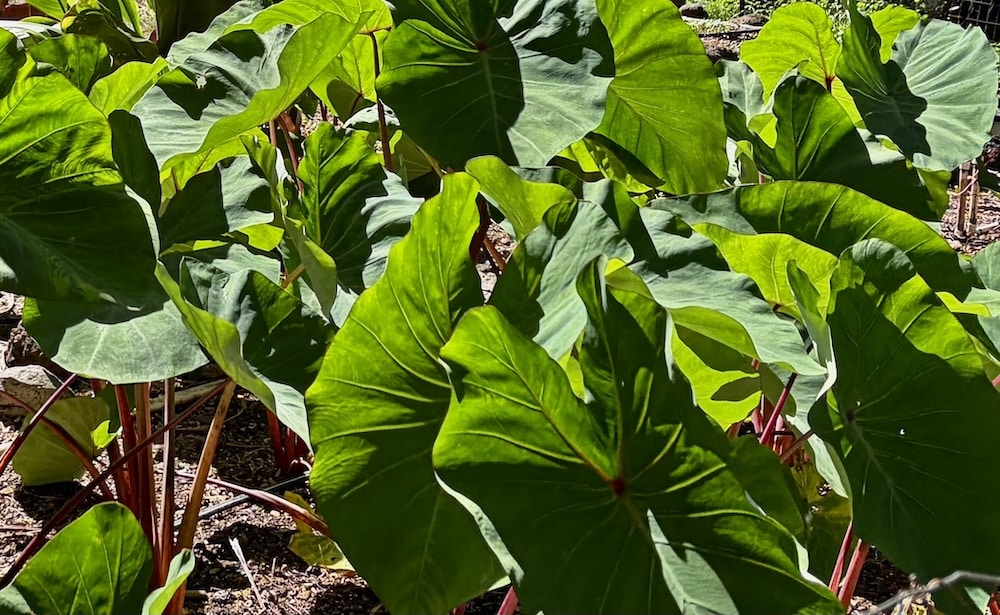
Taro – The heart-shaped leaves and starchy roots are a staple of traditional Hawaiian food.
There are a couple of visitors in the group, but the volunteers are mainly local residents – a mix of other families, and college and high school students. Guides offer various volunteer assignments, and we choose to wade knee-deep into the mud and tackle the task of weed eradication in the loʻi. But there’s no roundup around here! Other volunteers pick ti leaves while we layer them on the pu’e, mud mounds that surround the growing plants. Scooping fresh mud from the lo’i, we smooth it on top to secure the leaves, which will stop the weeds from sprouting up through the mud.
DON’T MISS! Glen Ivy Hot Springs: A Perfect Girl’s Day Trip
When little hands get tired, there is a spring-fed stream that runs alongside the taro patches to explore and rinse off the mud. My daughter befriends two other young children, and they splash in the water, hunt for rocks (which I remind her we have to put back before we leave), and try to scoop small fish with a net that one child generously shares. I continue layering the leaves and mud while my friend’s older kids have moved on to clear weeds from a second loʻi. Her son, who is six years of age and not a fan of the beach, gives this day a ten (the beach is a two). We all agree that, despite being sweaty and very muddy, this was a really fulfilling day. Hopefully, we have made a small contribution that will have a lasting impact, leaving this a better place for future generations.
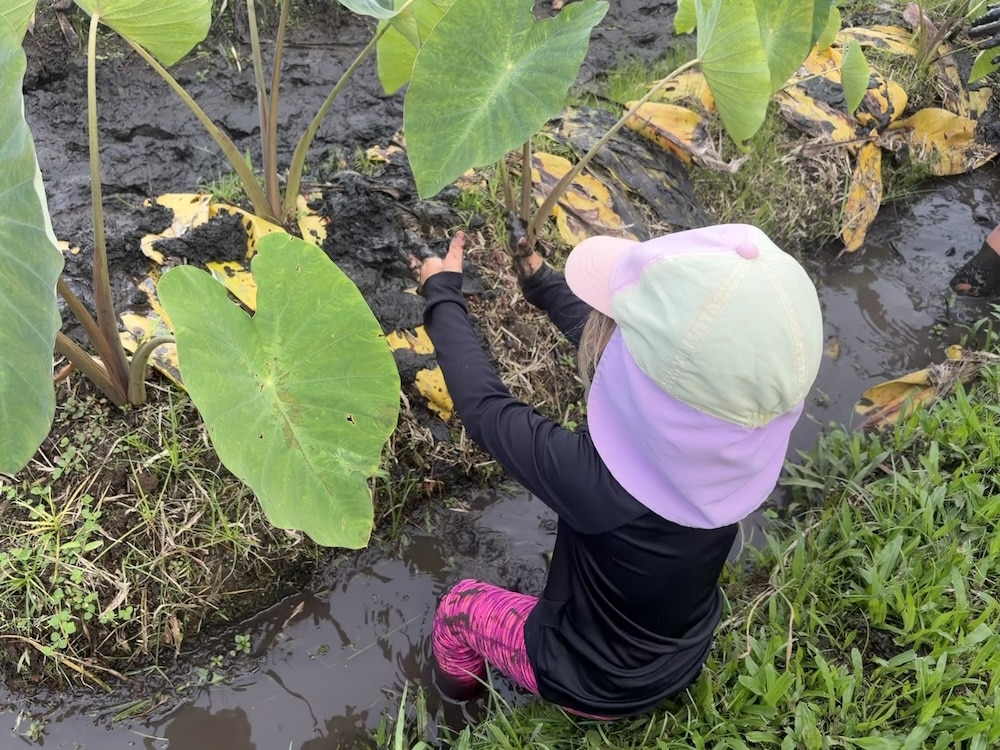
Work, or play? A day in the taro patch.
More Hawai’i volunteer programs
There is a list of many more Hawai’i volunteer programs that are open to visitors at the Go Hawaii Website. Here are some favorites:
Beach Clean-ups
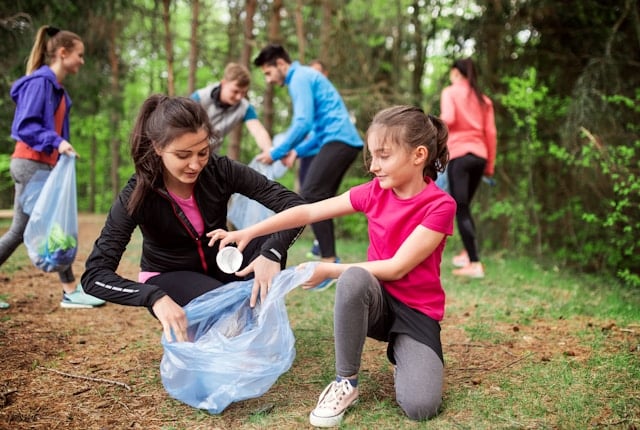
Hawaii beaches regularly win awards for being some of the most beautiful in the world. However, plastic pollution is a real threat to these coastal ecosystems and the wildlife that lives there. Ocean animals such as fish, sea turtles, and dolphins mistake the plastic for food, leading to all sorts of health issues and even death.
Visitors can join a beach clean-up with a local organization, which can be a great chance to experience a beach you may not have discovered otherwise, while helping to protect it. Sustainable Coastlines, 808 Cleanups, and Surfrider Foundation all hold regular clean-ups and some educational events at various locations on the major islands.
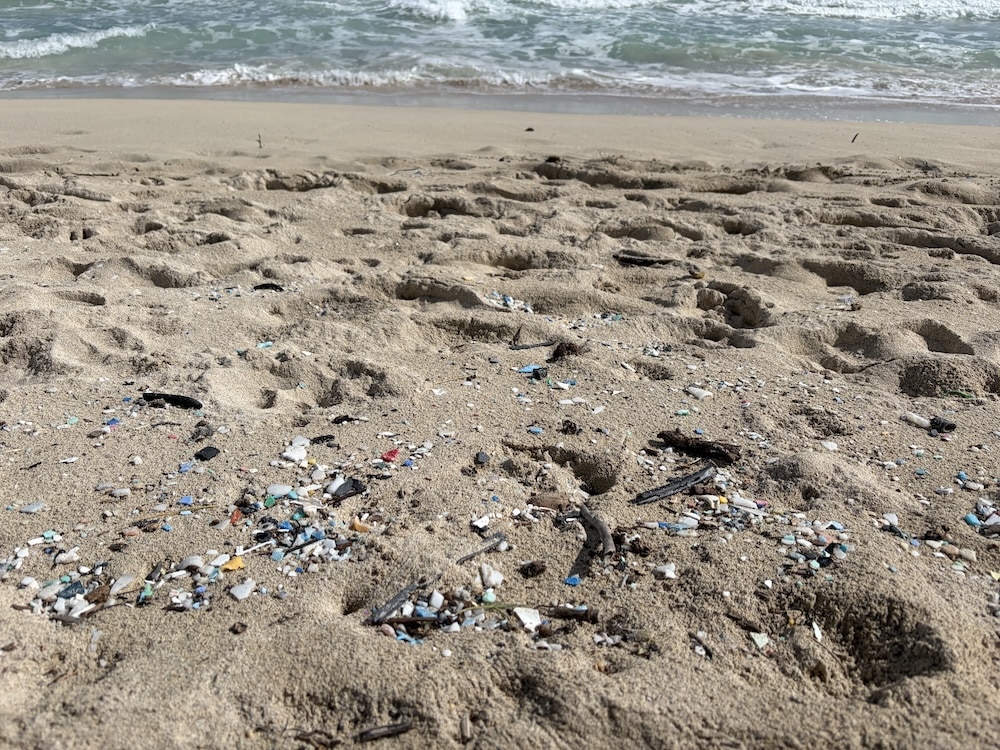
Microplastics wash ashore with the high tide. But they’re no match for a pair of gloves and a sieve.
DON’T MISS! VOLUNTEER FAMILY VACATIONS EVERY MEMBER WILL LOVE
Waimea Valley
Set back between the mountains behind the iconic Waimea Bay, Waimea Valley is a botanical garden and living pu’uhonua (place of refuge). There are regular community workdays that visitors are welcome to join. Activities include restoring native forests, maintaining gardens, pathways, and cultural sites, and removing invasive species.
The Waimean Valley also hosts special events, including celebrations of important occasions such as Lā Kūʻokoʻa (Hawaiian Independence Day), regularly scheduled hula performances, and other cultural experiences.
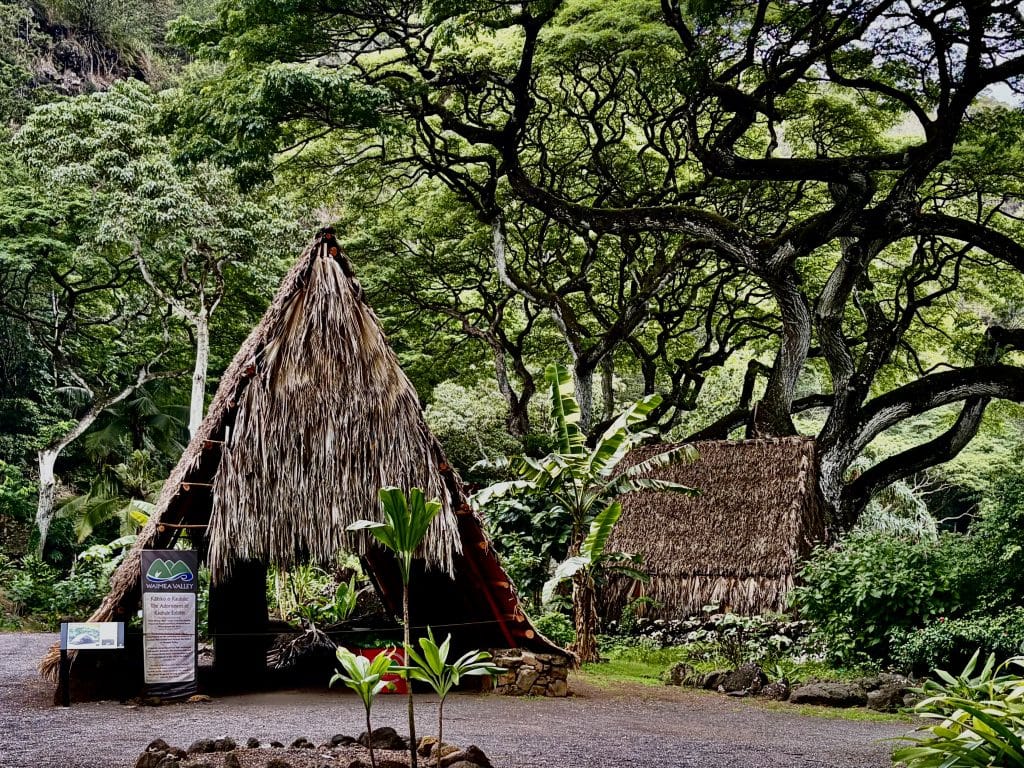
Learn more about Hawaiian culture at Waimea Valley.
Kōkua Hawaiʻi Foundation
A non-profit founded by Jack Johnson and his wife Kim, Kōkua Hawaiʻi Foundation’s mission is to support environmental education in schools throughout this island community. There are opportunities to participate in volunteer work at the Kōkua Learning Farm on their community workdays. Great for avid gardeners or those wishing to learn more, tasks include mulching, weeding, trimming, planting, and harvesting.
Mālama Loko ea Foundation
Mālama Loko ea is a restored native Hawaiian fish pond. Traditionally, these aquaculture sites provided a sustainable source of seafood for Native Hawaiians, using a unique and brilliant system to cultivate fish stocks. Small fish would swim into the rock wall enclosures through strategically slotted wooden gates. Once the fish grew big enough to harvest, they would no longer be able to fit through the slots to escape. Smaller fish, meanwhile, could easily come and go, making sure they would survive to produce the next generation.
Families can help restore and maintain the fish pond either by attending a community work day or booking a Hoʻlolea tour on most 2nd Saturdays and 4th Wednesdays of the month. Activities include a walking tour and mālama ʻāina activities both in the pond and the surrounding landscape.
Restoration and Conservation Projects
Hawaii Land Trust is a land stewardship nonprofit that operates multiple projects across the islands of Hawaiʻi. Many of these hold regular volunteer days, including Mahukona Cultural and Ecological Refuge on the Big Island, Waiheʻe Coastal Dunes and Wetland Refuge on the Island of Maui, and Kāhili Beach Preserve on Kauaʻi. Volunteer activities include weeding and invasive species removal, and other restoration and conservation work.
Diamond Head State Monument
Probably the most recognizable landmark in Hawaiʻi, Diamond Head is also one of the most visited hikes on Oʻahu. Volunteers assist with weeding, pruning, and removing invasive species. If you are staying in Waikiki and don’t have a car, it’s a really easy location to get to and is within walking distance of many hotels.
DON’T MISS! MAKE EPIC MEMORIES AT THESE 5 BEST FAMILY RESORTS ON OAHU
Tips For Volunteering Success
- Make sure your family has good sun coverage, including sunscreen, a hat, sunglasses, and long-sleeved shirt. Remember to use reef-safe sunscreen and eco-friendly bug spray, especially if you will be working in the water or it is likely to wash off in the environment.
- Bring plenty of water in a refillable water bottle.
- Snacks. If your children are like mine, the first 45 minutes of arriving at any activity is usually reserved for snack time. Make sure you have plenty packed to fuel your family, as you are likely to work up an appetite.
- Clothes you don’t mind getting dirty for working in water or mud. You may want a towel and change of clothes if you are likely to get very wet or muddy.
- Covered shoes are mandatory for participation in some activities. Water shoes can be nice for some activities if you have them.
- Check the organization’s website in advance to see if you need to RSVP or register in advance for certain workdays and for any additional information, such as age restrictions.
When you go
Getting To Hawaii From Los Angeles
Most airline carriers, Delta, United, American, Southwest, Alaska and Hawaiian offer daily flights to Daniel K. Inouye International Airport (HNL) from LAX. There are connections to all other major islands from there.
Flight time is approximately five and a half hours each way.
Where to stay
The following are just a few of the hotels participating in the Mālama Hawaiʻi Program, offering special discounts to visitors participating in certain volunteer programs in the islands:
The Kahala Hotel and Resort
Set right on the beach in a sheltered bay, The Kahala Hotel and Resort is a great choice for families who want to spend the majority of their time in the water. The hotel is close to Waikiki and all that Honolulu has to offer, and arguably has the best buffet brunch on Oʻahu.
Four Seasons Resort Maui at Wailea
True luxury, with a high-end spa and wellness center, world-class dining, and a host of unique and exciting tours, the Four Seasons Resort Maui at Wailea has activities to keep the whole family happy.
Outrigger Waikiki
Outrigger Waikiki in the heart of Waikiki gives families easy access to the beach, culture, music, and a range of activities.
IF YOU ENJOYED THIS ARTICLE, PLEASE CONSIDER PINNING OR SHARING IT!